Let’s start with a riddle; What has two hands, a face and has been striking fear into the hearts of teenagers in exam halls across the UK?
If you guessed “a strict invigilator,” you’re close. But, I’m actually talking about the harmless analogue clock. A significant number of teenagers can’t read them!
They look at the hands, feel a rush of temporal panic and suddenly, the last ten minutes of an exam are gone! Schools are now ripping out traditional clocks, replacing them with digital ones to reduce student stress.
I’m no expert but, that sounds to me like removing the hurdle rather than teaching them to jump!
And it appears that this “clock anxiety” may just be the tip of a fascinating (and potentially alarming) iceberg.
Gen Z (1997–2012) are the first generation in modern history to score lower on traditional, standardised cognition tests than their predecessors.
Telling time is more than just a skill; it’s a spatial, critical-thinking competency. And its loss highlights a much larger academic crack in the foundation.
We are witnessing, in real-time, the stalling (and now reversing) of something called the “Flynn Effect“.
Named after researcher James Flynn, this theory showed that for decades, each new generation got sharper, with IQ scores rising roughly 3 points every ten years. We were becoming masters of abstract thinking.
But now, the data tells us we’ve hit a wall. Hard.
Testimony presented to the U.S. Senate in early 2026 points to a global decline in cognitive abilities and IQ scores starting around 2010, effectively reversing the long-term trend.
Dr. Jared Cooney Horvath blames the rapid, un-checked integration of digital technology in schools, which he argues is disrupting the deep-learning processes our brains need. (Read the full testimony here)
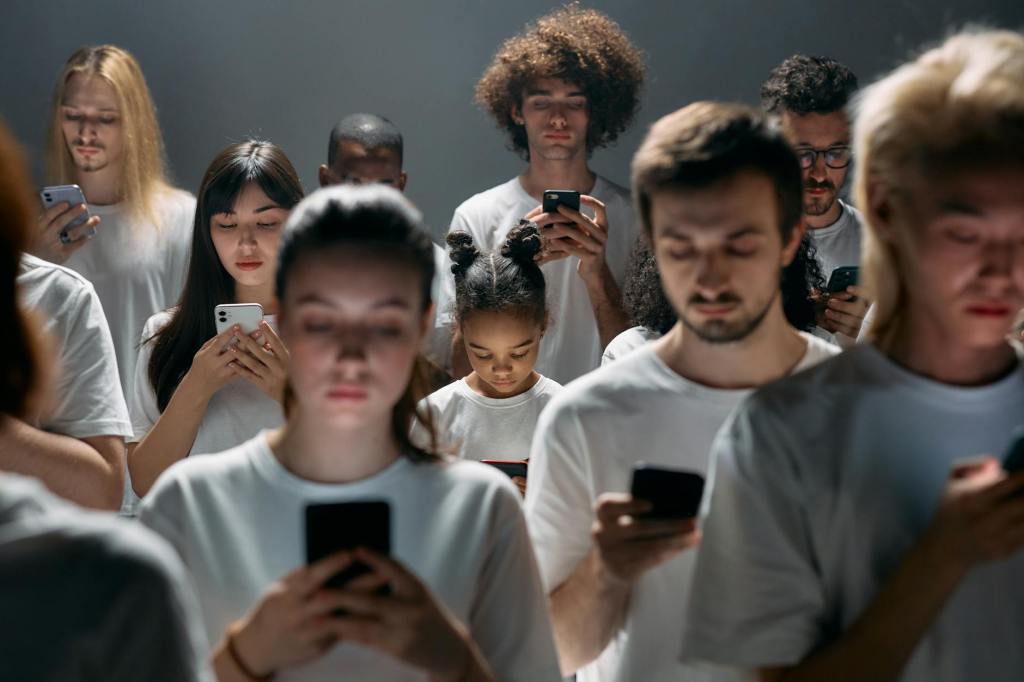
Essentially, we might be trading deep cognitive strength for shallow digital speed. So, should we be worried?
The short answer is, yes…but not in a “the world is ending” way. (Well, no more than usual perhaps!)
We should be…concerned enough to make changes. And the good news is cognitive strength, like a muscle, can be rebuilt. We just need to modernise and re-balance the workout.
We don’t need to ban technology, but we do need to stop letting it do all the cognitive “heavy lifting”. Stop trading our deep, intellectual capacity for shallow digital speed while the tide can still be turned.
Because, let’s face it, if the Wi-Fi goes down for good, we’re all doomed. Before we end up relying on our smartphones to remember how to breathe, try these non-digital (slightly painful) ways to resurrect your neurons:
📡 The Generation X Files: Citizen Jane’s Cognitive Kickstart (No Charger Required)
- ⌚ Master the Analogue Watch: Staring at a ticking, hands-on watch actually teaches you how time works. It’s not just a fancy notification screen; it’s a small, non-electric, ticking reminder that time is passing, the future is now…and you’re already late!
- 📍 Become a Map Detective: Turn off the GPS. Rediscover the glovebox atlas or (gasp) memorise the route. It forces your brain to build spatial awareness, not just blindly follow a digital blue dot into a lake!
- 🎭 The “No-Phone” Line Stand: Waiting in line? Instead of scrolling and ignoring real life, pick a stranger and create a ludicrous, elaborate backstory for them. It’s creative, hilarious and it’s a workout for your imagination.
- 🎨 Become an Amateur Artisan: Take up sketching, pottery, or adult colouring books. Engaging your hands in messy, creative, non-digital work stimulates neural pathways and lowers stress, making room for, well, actual thought.
- 👐 Master the “Wrong” Hand: Brush your teeth, eat your breakfast, or try to write/draw with your non-dominant hand. It feels utterly ridiculous, but it literally forces your brain to re-map connections.
- 📚 Deep Work (With Stakes): Pick up a physical book, write a letter, or start a sketchbook. Do it for one hour, with your phone in a completely different room. Silence is golden when it comes to long-term focus.
The choice is ours: use it or lose it. We can get lazy with digital assistance or start exercising those neural pathways instead.
So, grab a book, buy a watch with actual hands, or just try going somewhere without a digital voice telling you where to turn. Let’s prove the scientists wrong – or at least have a laugh while the digital world buffers!
It’s a bold plan I know, but (let’s be honest) half of us will have forgotten why we’re even in this room by the time I finish this sente…Oh, look! A notification…
Citizen Jane x ✌️
What was your most “analogue” moment this week? Let me know in the comments below and let’s keep the conversation alive…while we can still remember how to type! 👇
p.s. The Sunday Spotlight idea I tried a couple of weeks back was a bit of a non-starter. Back to the drawing board and will revisit in the future…


Now it’s your turn! Join me here and let’s keep talking…👇🗣📣